


听力部分
Section | 版本号 | 场景 | 题型 |
| One | 20146 | 求职 | 填空10 |
1. Elsinore
2. 077896245
3. waiter
4. baseball coach
5. beach
6. diving
7. October
8. Saturday
9. 6
10. radio
Section | 版本号 | 场景 | 题型 |
| Two | 30102 | 交换网站 | 单项选择4 多项选择2 填空4 |
11-14单选
11. B
12. A
13. B
14. C
15-16 多选
15. B
16. C
17-20 填空
17. popular
18. taste
19. photo
20. feedback
Section | 版本号 | 场景 | 题型 |
| Three | 30148 | 论文讨论 | 填空7 单选3 |
21-27 填空
21. iconic sites, undeveloped
22. range
23. accommodations, communities
24.training
25. big five
26. housing
27. conservation
28-30选择
28. B
29. C
30. F
Section | 版本号 | 场景 | 题型 |
| Four | 40114 | 有机农业 | 填空 7 单选3 |
31-37 填空
31. sustainable
32.sales
33.energy
34. insects
35. tomato/photo
36. 10%
37. grass
38-40 选择
38. A
39. B
40. A
阅读部分
Passage | 题材 | 题目 | 题型 |
| One | 科学 | T-rex: Hunter or Scavenger? | 判断+填空+匹配 |
参考原文:
T-rex: Hunter or Scavenger?
Jack Horner is an unlikely academic: his dyslexia is so bad that he has trouble reading a book. But he can read the imprint of life in sandstone or muddy shale across a distance of 100 years, and it is this gift that has made him curator of paleontology at Montana State University’s Museum of the Rockies, the leader of a multi-million dollar scientific project to expose a complete slice of life 68 million years ago, and a consultant to Steven Spielberg and other Hollywood figures.
His father had a sand and gravel quarry in Montana, and the young Horner was a collector of stones and bones, complete with notes about when and where he found them. “My father had owned a ranch when he was younger, in Montana,” he says. “He was enough of a geologist, being a sand and gravel man, to have a pretty good notion that they were dinosaur bones. So when I was eight years old he took me back to the area that had been his ranch, to where he had seen these big old bones. I picked up one. I am pretty sure it was the upper arm bone of a duckbilled dinosaur: it probably wasn’t a duckbilled dinosaur but closely related to that. I catalogued it, and took good care of it, and then later when I was in high school, excavated my first dinosaur skeleton. It obviously started earlier than eight and I literally have been driven ever since. I feel like I was born this way.”
Horner spent seven years at university, but never graduated. “I have a learning disability, I would call it a learning difference — dyslexia, they call it — and I just had a terrible time with English and foreign languages and things like that. For a degree in geology or biology they required two years of a foreign language. There was no way in the world I could do that. In fact, I didn’t really pass English. So I couldn’t get a degree, I just wasn’t capable of it. But I took all of the courses required and I wrote a thesis and I did all sorts of things. So I have the education, I just don’t have the piece of paper.” he says.
“We definitely know we are working on a very broad coastal plain with the streams and rivers bordered by conifers and hardwood plants, and the areas in between these rivers were probably fern-covered. There were no grasses at all: just ferns and bushes — an unusual landscape, kind of taking the south-eastern United States — Georgia, Florida — and mixing it with the moors of England and flattening it out,” he says. “Triceratops is very common: they are the cows of the Cretaceous, they are everywhere. Duckbilled dinosaurs are rela- tively common but not as common as triceratops and T-rex, for a meat-eating dinosaur, is very common. What we would consider the predator-prey ratio seems really off the scale. What is interesting is the little dromaeosaurs, the ones we know for sure were good preda- tors, are haven’t been found.”
That is why he sees T-rex not as the lion of the Cretaceous savannah but its vulture. “Look at the wildebeest that migrate in the Serengeti of Africa, a million individuals lose about 200,000 individuals in that annual migration. There is a tremendous carrion base there. And so you have hyenas, you have tremendous numbers of vultures that are scavenging, you don’t have all that many animals that are good predators. If T-rex was a top predator, especially considering how big it is, you’d expect it to be extremely rare, much rarer than the little dromaeosaurs, and yet they are everywhere, they are a dime a dozen,” he says. A 12-tonne T-rex is a lot of vulture, but he doesn’t see the monster as clumsy. He insisted his theory and finding, dedicated to further research upon it, of course, he would like to reeval- uate if there is any case that additional evidence found or explanation raised by others in the future.
He examined the leg bones of the T-rex, and compared the length of the thigh bone (upper leg) to the shin bone (lower leg). He found that the thigh bone was equal in length or slightly longer than the shin bone, and much thicker and heavier, which proves that the animal was built to be a slow walker rather than fast running. On the other hand, the fossils of fast hunting dinosaurs always showed that the shin bone was longer than the thigh bone. This same truth can be observed in many animals of today which are designed to run fast: the ostrich, cheetah, etc.
He also studied the fossil teeth of the T-rex, and compared them with the teeth of the Velociraptor, and put the nail in the coffin of the “hunter T-rex theory”. The Velociraptor’s teeth which like stake knifes: sharp, razor-edged, and capable of tearing through flesh with ease. The T-rex’s teeth were huge, sharp at their tip, but blunt, propelled by enormous jaw muscles, which enabled them to only crush bones.
With the evidence presented in his documentary, Horner was able to prove that the idea of the T-rex as being a hunting and ruthless killing machine is probably just a myth. In light of the scientific clues he was able to unearth, the T-rex was a slow, sluggish animal which had poor vision, an extraordinary sense of smell, that often reached its “prey” after the real hunters were done feeding, and sometimes it had to scare the hunters away from a corpse. In order to do that, the T-rex had to have been ugly, nasty-looking, and stinky. This is actu- ally true of nearly all scavenger animals. They are usually vile and nasty looking.
Questions 1-7
Do the following statements agree with the information given in Reading Passage 1?
In boxes 1-7 on your answer sheet, write
1.Jack Horner knew exactly that the bone picked up in his father’s ranch belonged to a certain dinosaur when he was at the age of 8.
2.Jack Horner achieved a distinctive degree in university when he graduated.
3.Jack Horner believes that the number of prey should be more than that of predators.
4.T-rex’s number is equivalent to the number of vulture in the Serengeti.
5.The hypothesis that T-rex is the top predator conflicts with the fact of preda- tor-prey ratio which Jack found.
6.Jack Horner refused to accept any other viewpoints about T-rex’s theory.
7.Jack Horner is the first man that discovered T-rex’s bones in the world.
填空
Jack Horner found that T-rex’s 8 __________ is shorter than the thigh bone, which demonstrates that it was actually a 9 __________, unlike other swift animals such as ostrich or 10 ____________ that was built to 11 ____________. Another explanation supports his idea is that T-rex’s teeth were rather 12 ____________, which only allowed T-rex to 13 ____________ hard bones instead of tearing flesh like Velociraptor.
参考答案:
T
F
T
NG
T
F
NG
shin bone
slow walker
cheetah
run fast
blunt
crush
(答案仅供参考)
Passage | 题材 | 题目 | 题型 |
| Two | 人文 | The meaning and power of smell | 判断+填空+匹配 |
类似文章:
The meaning and power of smell
The sense of smell, or olfaction, is powerful. Odours affect us on a physical, psychological and social level. For the most part, however, we breathe in the aromas which surround us without being consciously aware of their importance to us. It is only when the faculty of smell is impaired for some reason that we begin to realise the essential role the sense of smell plays in our sense of well-being.
A A survey conducted by Anthony Synott at Montreal's Concordia University asked participants to comment on how important smell was to them in their lives. It became apparent that smell can evoke strong emotional responses. A scent associated with a good experience can bring a rush of joy, while a foul odour or one associated with a bad memory may make us grimace with disgust. Respondents to the survey noted that many of their olfactory likes and dislikes were based on emotional associations. Such associations can be powerful enough so that odours that we would generally label unpleasant become agreeable, and those that we would generally consider fragrant become disagreeable for particular individuals. The perception of smell, therefore, consists not only of the sensation of the odours themselves, but of the experiences and emotions associated with them.
B Odours are also essential cues in social bonding. One respondent to the survey believed that there is no true emotional bonding without touching and smelling a loved one. In fact, infants recognise the odours of their mothers soon after birth and adults can often identify their children or spouses by scent. In one well-known test, women and men were able to distinguish by smell alone clothing worn by their marriage partners from similar clothing worn by other people. Most of the subjects would probably never have given much thought to odour as a cue for identifying family members before being involved in the test, but as the experiment revealed, even when not consciously considered, smells register.
C In spite of its importance to our emotional and sensory lives, smell is probably the most undervalued sense in many cultures. The reason often given for the low regard in which smell is held is that, in comparison with its importance among animals, the human sense of smell is feeble and undeveloped. While it is true that the olfactory powers of humans are nothing like as fine as those possessed by certain animals, they are still remarkably acute. Our noses are able to recognise thousands of smells, and to perceive odours which are present only in extremely small quantities.
D Smell, however, is a highly elusive phenomenon. Odours, unlike colours, for instance, cannot be named in many languages because the specific vocabulary simply doesn't exist. 'It smells like ... ,' we have to say when describing an odour, struggling to express our olfactory experience. Nor can odours be recorded: there is no effective way to either capture or store them over time In the realm of olfaction, we must make do with descriptions and recollections. This has implications for olfactory research.
E Most of the research on smell undertaken to date has been of a physical scientific nature. Significant advances have been made in the understanding of the biological and chemical nature of olfaction, but many fundamental questions have yet to be answered. Researchers have still to decide whether smell is one sense or two - one responding to odours proper and the other registering odourless chemicals in the air. Other unanswered questions are whether the nose is the only part of the body affected by odours, and how smells can be measured objectively given the nonphysical components. Questions like these mean that interest in the psychology of smell is inevitably set to play an increasingly important role for researchers.
F However, smell is not simply a biological and psychological phenomenon. Smell is cultural, hence it is a social and historical phenomenon. Odours are invested with cultural values: smells that are considered to be offensive in some cultures may be perfectly acceptable in others. Therefore, our sense of smell is a means of, and model for, interacting with the world. Different smells can provide us with intimate and emotionally charged experiences and the value that we attach to these experiences is interiorised by the members of society in a deeply personal way. Importantly, our commonly held feelings about smells can help distinguish us from other cultures. The study of the cultural history of smell is, therefore, in a very real sense, an investigation into the essence of human culture.
参考答案:
判断4:
14 humans perceive basic sounds of speeches more easily than other sounds TRUE
15 humans can distinguish more colours than most mammals TRUE
16 humans’daylight eyesight is superior than other animals NG
17 although animals have different eating habits, they can all sense bitter, sour, sweet and salty FALSE
配对题4 :
18 the sense varying from person to person C. taste
19 the sense can only be useful for a certain point on the spectrum A. hearing
20 the sense contributed to the distribution of various ethnic groups C. taste
21 the sense may be ignored unless it senses something unpleasant D. smell
流程图 5 :
Touch- The Least Reliable Sense ---- Tony Dickerson’s Experiment
22 give all subjects inactive ingredient
23 tells Group A they have painkillers
24 tells Group B what they have will increase their awareness of pain
25 Group A happy to switch to maximum pain level
26 Group B find mild shock intolerable
文章大意:主要介绍了电影的发展史,由优化以及其他艺术的制作过程比较,讲到后来电影的发展。
参考答案:
List of Headings 7:
27 Paragraph A vi Images of a lost technology
28 Paragraph C i the need to coordinate expertise
29 Paragraph D iv Painting and cinema - comparison explained
30 Paragraph E ii Possibility and risks of imposing individual view
31 Paragraph F vii An extreme case
32 Paragraph G ix true meaning of the film-producing
33 Paragraph H iii film-making as a collaborative process
配对6:
34 One problem of the fresco painting is B. finished at one place
35 One advantage of oil paining is G. painters can change their painting
36 One common aspect of fresco and traditional filming C. need more than one person to produce
37 In the case of oil painting and digital filming F. possibility of imposing to individualistic view
38 The film-making process is deemed interactive process A. is suggested by Coppola
39 The author thinks the best movie should enable the audience to benefit from D. an individual view from the production of many people
单选1:
40 In the last paragraph, the author thinks that digital filming will lead to
A. a reduction of focus in production
(答案仅供参考)
写作部分
Task | 图表类型 | 题目 |
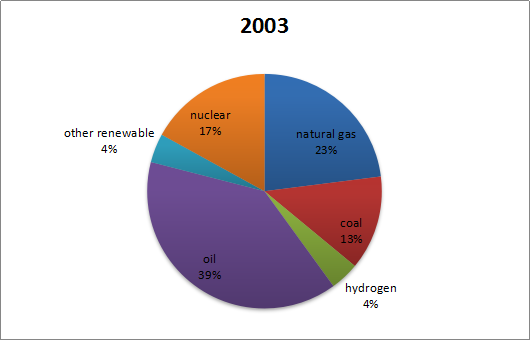
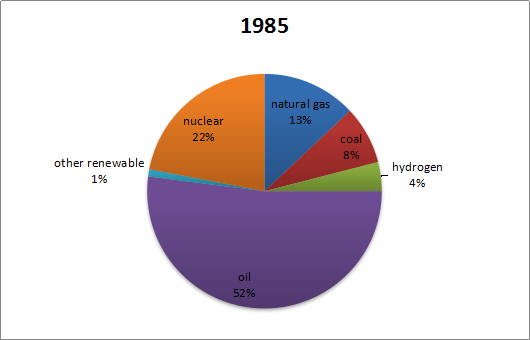
| One | 饼图题 | The charts show pollutants entering a particular area of ocean in 1997 and in 2007 |
Task | 题型类别 | 作文话题 | 题目 |
| Two | 观点类 (agree/ disagree) | 教育类 | Full-time university students should spend a lot of time in studying,but it is essential to be involved in other activities.To what extend do you agree or disagree? |
考试热门工具预约
- 测启德在线学习系统,免费开放预约
- 练丰富题库免费预约试用
- 学0元免费预约公开课
- 评实地测试,老师测评,免费开放预约

雅思口语Part2话题卡怎么准备万能素材
2026/09/18 18:46:04

雅思考试前一周怎么冲刺复习
2026/09/18 18:45:55

雅思G类和A类成绩哪个认可度高
2026/09/18 18:45:47

雅思成绩什么时候提交申请最合适
2026/09/18 18:45:38

雅思口语Part1常见问题及回答思路
2026/09/18 18:45:30

托福成绩可以替代雅思申请英国大学吗
2026/09/18 18:45:21