

听力部分

1. June 27
2. Swavesey
3. intermediate
4. 285
5. relaxation
6. vegetarian
7. swimming
8. horse riding
9. Tennis
10. outside

五选二 :
11. B
12. D
五选二 :
13. B
14. E
配对题:
15. E
16. F
17. A
18. G
19. B
20. H

21. A. compulsory and regular
22. C. students at working
23. A. full-time and flexible study time
24. B. people out of campus
25. A. lab facilities are not available
26. C. environmental science/microbiology
27-29. 配对
27. mathematics
28. statistics
29. biology
30. tuition/1500/loan/allowance

31. preserved
32. trace
33. buried
34. mineral soil
35. exhibitions
36. expensive
37. tape measure
38. rock
39. photos
40. soft sediment
阅读部分

Decision making and Happiness
A Americans today choose among more options in more parts of life than has ever been possible before. To an extent, the opportunity to choose enhances our lives. It is only logical to think that if some choice is good, more is better; people who care about having infinite options will benefit from them, and those who do not can always just ignore the 273 versions of cereal they have never tried. Yet recent research strongly suggests that, psychologically, this assumption is wrong. Although some choice is undoubtedly better than none, more is not always better than less.
B Recent research offers insight into why many people end up unhappy rather than pleased when their options expand. We began by making a distinction between “maximizers” (those who always aim to make the best possible choice) and “satisficers” (those who aim for “good enough,” whether or not better selections might be out there).
C In particular, we composed a set of statements-the Maximization Scale-to diagnose people’s propensity to maximize. Then we had several thousand people rate themselves from I t0 7 (from “completely disagree” to “completely agree”) on such statements as “I never settle for second best.” We also evaluated their sense of satisfaction with their decisions. We did not define a sharp cutoff to separate maximizers from satisficers, but in general, we think of individuals whose average scores are higher than 4 (the scale’s midpoint) as maximizers and those whose scores are lower than the midpoint as satisficers. People who score highest on the test-the greatest maximisers-engages in more product comparisons than the lowest scorers, both before and after they make purchasing decisions, and they take longer to decide what to buy.
When satisficers find an item that meets their standards, they stop looking. But maximizers exert enormous effort to read labels, checking out consumer magazines and trying new products. They also spend more time comparing their purchasing decisions with those of others.
D We found that the greatest maximizers are the least happy with the fruits of their efforts. When they compare themselves with others, they get little pleasure from finding out that they did better and substantial dissatisfaction from finding out that they did worse.They are more prone to experiencing regret after a purchase, and if their acquisition disappoints them, their sense of well-being takes longer to recover. They also tend to brood or ruminate more than satisficers do.
E Does it follow that maximizers are less happy in general than satisficers? We tested this by having people fill out a variety of questionnaires known to be reliable indicators of well-being. As might be expected, individuals with high maximization scores experienced less satisfaction with life and were less happy, less optimistic and more depressed than people with low maximization scores. Indeed, those with extreme maximization ratings had depression scores that placed them in the borderline clinical range.
F Several factors explain why more choice is not always better than less,especially for maximizers. High among these are “opportunity costs.” The quality of any given option cannot be assessed in isolation from its alternatives. One of the “costs” of making a selection is losing the opportunities that a different option would have afforded. Thus an opportunity cost of vacationing on the beach in Cape Cod might be missing the fabulous restaurants in the Napa Valley. Early decision-making research by Daniel Kahneman and Amos Tversky showed that people respond much more strongly to losses than gains. If we assume that opportunity costs reduce the overall desirability of the most preferred choice, then the more alternatives there are, the deeper our sense of loss will be and the less satisfaction we will derive from our ultimate decision.
G The problem of opportunity costs will be worse for a maximizer than for a satisficer. The latter’s “good enough” philosophy can survive thoughts about opportunity costs. In addition, the “good enough” standard leads to much less searching and inspection of alternatives than ‘the maximizer’s “best” standard. With fewer choices under consideration, a person will have fewer opportunity costs to subtract.
H Just as people feel sorrow about the opportunities they have forgone, they may also suffer regret about the option they settle on. My colleagues and I devised a scale to measure proneness to feeling regret, and we found that people with high sensitivity to regret are less happy, less satisfied with life, less optimistic and more depressed than those with low sensitivity. Not surprisingly, we also found that people with high regret sensitivity tend to be maximizers. Indeed, we think that worry over future regret is a major reason that individuals become maximizers. The only way to be sure you will not regret a decision is by making the best possible one. Unfortunately, the more options you have and the more opportunity costs you incur, the more likely you are to experience regret.
I In a classic demonstration of the power of sunk costs, people were offered season subscriptions to a local theater company. Some were offered the tickets at full price and others at a discount. Then the researchers simply kept track of how often the ticket purchasers actually attended the plays over the course of the season. Full-price payers were more likely to show up at performances than discount payers. The reason for this, the investigators argued, was that the full-price payers would experience more regret if they did not use the tickets because not using the more costly tickets would constitute a bigger loss. To increase sense of happiness, we can decide to restrict our options when the decision is not crucial. For example, make a rule to visit no more than two stores when shopping for clothing.
Questions 28-31
Use the information in the passage to match the category (listed A-D) with descriptions
or deeds below. Write the appropriate letters A-D in boxes 28-31 on your answer sheet.
28 finish transaction when the items match their expectation
29 buy the most expensive things when shopping
30 consider repeatedly until they make final decision
31 participate in the questionnaire of the author
Questions 32-36
Do the following statements agree with the information given in Reading Passage 3?
In boxes 32-36 0n your answer sheet, write
32 With the society’s advancement, more chances make our lives better and happier.
33 There is difference of findings by different gender classification.
34 The feeling of loss is greater than that of acquisition.
35 “Good enough” plays a more significant role in pursuing “best” standards of
maximizer.
36 There are certain correlations between the “regret” people and the maximizers.
Questions 37-40
Choose the correct letter, A, B. C or D.
Write your answers in boxes 37-40 0n your answer sheet
37 What is the subject of this passage?
A regret makes people less happy
B choices and well-being
C an interesting phenomenon
D advices on shopping
38 According to the conclusion of questionnaires, which of the following statement is correct?
A maxinusers are less happy
B state of being optimistic is important
C uncertain results are found.
D maximizers tend to cross bottom line
39 The experimental on theater tickets suggested:
A sales are different according to each season
B people like to spend on the most expensive items
C people feel depressed if they spend their vouchers
D people would regret if they failed to spend on discount sales.
40 What is author’s suggestion on how to increase happiness?
A focus the final decision
B be sensitive and smart
C reduce the choice or option
D read label carefully
答案:
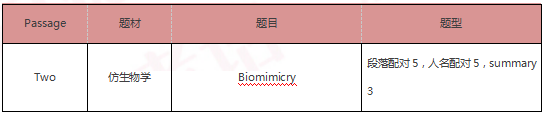
段落细节配对题
1. C 一个自然发明比实际看起来简单
2. B 人们脱离觉得可以脱离自然地原因
3. A一个产于自然的invention
4. C 人类事实上不能够脱离自然的原因
5. E
人名配对题
6. B
7. D科学相比较自然还是有很多优势
8. A很早之前人们就依赖自然创造发明了
9. B
10. C
Summary填空
11. compared to that of …mound
12. use water to cool
13. 科学家现在使用fans去降温

参考答案:
段落细节配对
27. G 科学实验的提及
28. D
29. B
30. A global warming可能带来的影响
31. E
32. F 人类流感病毒的地理位置确定的原因
33. C 病毒传播到ice的四种方法
34-40 句子填空
34. 病毒必须具有strong protein coast 才能在极端条件下存活下来
35. Influenza virus
36. 科学家收的两种方式 by drilling and melting
37. Collective natural herd 会 diminish
38. 消灭病毒的自然过程叫做 hibernation
39. 除了对人类植物影响外,marine creatures 也会受到影响
40. 新旧病毒结合产生supervirus
写作部分:
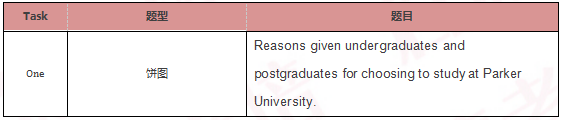
Task 1
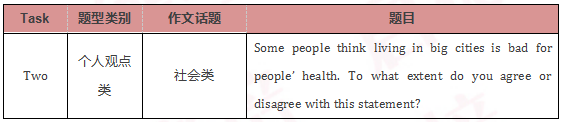
Task 2
欢迎访问启德考培北京分校 欢迎咨询启德考培学习顾问
免费获取备考提分解决方案,您可以通过以下3种方式联络我们:
1、欢迎致电启德考培客户服务中心400-100-0918;
2、欢迎 点击这里 进行网络咨询;
3、填写表单,我们会在1-3天内为您提供专业的服务。
考试热门工具预约
- 测启德在线学习系统,免费开放预约
- 练丰富题库免费预约试用
- 学0元免费预约公开课
- 评实地测试,老师测评,免费开放预约

雅思口语Part2话题卡怎么准备万能素材
2026/09/18 18:46:04

雅思考试前一周怎么冲刺复习
2026/09/18 18:45:55

雅思G类和A类成绩哪个认可度高
2026/09/18 18:45:47

雅思成绩什么时候提交申请最合适
2026/09/18 18:45:38

雅思口语Part1常见问题及回答思路
2026/09/18 18:45:30

托福成绩可以替代雅思申请英国大学吗
2026/09/18 18:45:21