


听力部分

1. front page
2. athlete of week
3. James Parkhurst
4. personal
5.colour
6. normal
7. 80
8. check
9. by mail
10. every day

11. bones
12. 170 footprints
13. night tour
14. early
15. minerals
16. parking
17. blue
18. cleanest
19.permit
20. boat

21-25选择
21.A
22. A
23. C
24. B
25. A
26-30 配对
26 A
28 C
28. B
29. E
30. D

31. driving
32. coffee
33. meat
34. cooking
35. packaging
36. transportation
37. forest
38.farming
39.food
40.fishing
阅读部分

Man or Machine
ADuring July 2003, the Museum of Science in Cambridge, Massachusetts exhibitedwhat Honda calls 'the world's most advanced humanoid robot', AS1MO (theAdvanced Step in Innovative Mobility). Honda's brainchild is on tour in NorthAmerica and delighting audiences wherever it goes. After 17 years in themaking, ASIMO stands at four feet tall, weighs around 115 pounds and looks likea child in an astronaut's suit. Though it is difficult to see ASIMO's face at adistance, on closer inspection it has a smile and two large eyes' that concealcameras. The robot cannot work autonomously - its actions are 'remotecontrolled' by scientists through the computer in its backpack. Yet watchingASMIO perform at a show in Massachusetts it seemed uncannily human. Theaudience cheered as ASIMO walked forwards and backwards, side to side and upand downstairs. After the show, a number of people told me that they would likerobots to play more of a role in daily life - one even said that the robotwould be like 'another person'.
BWhile the Japanese have made huge strides in solving some of the engineeringproblems of human kinetics and bipedal movements, for the past 10 yearsscientists at MIT's former Artificial Intelligence (Al) lab (recently renamedthe Computer Science and Artificial Intelligence Laboratory, CSAIL) have beenmaking robots that can behave like humans and interact with humans. One of MITsrobots, Kismet, is an anthropomorphic head and has two eyes (complete witheyelids), ears, a mouth, and eyebrows. It has several facial expressions,including happy, sad, frightened and disgusted. Human interlocutors are able toread some of the robot's facial expressions, and often change their behaviortowards the machine as a result - for example, playing with it when it appears‘sad’. Kismet is now in MIT’s museum, but the ideas developed here continue tobe explored in new robots.
CCog (short for Cognition) is another pioneering project from MIT’s former AIlab. Cog has a head, eyes, two arms, hands and a torso - and its proportionswere originally measured from the body of a researcher in the lab. The work onCog has been used to test theories of embodiment and developmental robotics,particularly getting a robot to develop intelligence by responding to itsenvironment via sensors, and to learn through these types of interactions.
DMIT is getting furthest down the road to creating human-like and interactiverobots. Some scientists argue that ASIMO is a great engineering feat but not anintelligent machine - because it is unable to interact autonomously withunpredictabilities in its environment in meaningful ways, and learn fromexperience. Robots like Cog and Kismet and new robots at MIT’s CSAIL and medialab, however, are beginning to do this.
EThese are exciting developments. Creating a machine that can walk, makegestures and learn from its environment is an amazing achievement. And watchthis space: these achievements are likely rapidly to be improved upon. Humanoidrobots could have a plethora of uses in society, helping to free people fromeveryday tasks. In japan, for example, there is an aim to create robots thatcan do the tasks similar to an average human, and also act in moresophisticated situations as firefighters, astronauts or medical assistants tothe elderly in the workplace and in homes – partly in order to counterbalancethe effects of an ageing population.
FSuch robots say much about the way in which we view humanity, and they bringout the best and worst of us. On one hand, these developments express humancreativity - our ability to invent, experiment, and to extend our control overthe world. On the other hand, the aim to create a robot like a human being isspurred on by dehumanized ideas - by the sense that human companionship can besubstituted by machines; that humans lose their humanity when they interactwith technology; or that we are little more than surface and ritual behaviors,that can be simulated with metal and electrical circuits.
参考答案:
段落信息配对题:
1.Different ways of robots in helping people E
2.the name of a robot shoes limbs are of the same size of an adult C
3.a contrast between ASIMO and other robots D
4.robot use in artistic works G
5.arguments for and against robots F
6.people’s reaction to robots in an exhibition A
填空题:
7.company
8.backpack
9.interact with
10.behaviour
11.Cog
12.intelligence
13.environment
(答案仅供参考)

参考文章:
Forhundreds of years, the mists and fogs of Britain's major cities were all toooften polluted and noxious, with London especially badly affected. The fogsendangered health and also posed a threat to travellers who lost their way andthus became an easy prey to robbers. Around 1807, the smoke-laden fog of the capitalcame to be known as a 'London particular', i.e. a London characteristic.Charles Dickens used the term in Bleak House (published in 1853) and providedgraphic descriptions of London's fogs in this and other novels.
Thesmoke-laden fog that shrouded the capital from Friday 5 December to Tuesday 9December 1952 brought premature death to thousands and inconvenience tomillions. An estimated 4,000 people died because of it, and cattle atSmithfield, were, the press reported, asphyxiated. Road, rail and air transportwere almost brought to a standstill and a performance at the Sadler's WellsTheatre had to be suspended when fog in the auditorium made conditionsintolerable for the audience and performers.
Thedeath toll of about 4,000 was not disputed by the medical and otherauthorities, but exactly how many people perished as a direct result of the fogwill never be known. Many who died already suffered from chronic respiratory orcardiovascular complaints. Without the fog, they might not have died when theydid. The total number of deaths in Greater London in the week ending 6 December1952 was 2,062, which was close to normal for the time of year. The followingweek, the number was 4,703. The death rate peaked at 900 per day on the 8th and9th and remained above average until just before Christmas. Mortality frombronchitis and pneumonia increased more than sevenfold as a result of the fog.
Thefog of December 1952 was by no means the first to bring death and inconvenienceto the capital. On 27 December 1813 fog was so dense that the Prince Regent,having set out for Hatfield House, was forced to turn back at Kentish Town. Thefog persisted for almost a week and on one day was so thick that the mail coachfrom London to Birmingham took seven hours to reach Uxbridge. Contemporaryaccounts tell of the fog being so thick that the other side of the street couldnot be seen. They also tell of the fog bearing a distinct smell of coal tar.After a similar fog during the week of 7?13 December 1873, the death rate inthe Administrative County of London increased to 40 per cent above normal.Marked increases in death rate occurred, too, after the notable fogs of January1880, February 1882, December 1891, December 1892 and November 1948. The worstaffected area of London was usually the East End, where the density offactories and domestic dwellings was greater than almost anywhere else in thecapital. The area was also low-lying, which inhibited fog dispersal.
Inearly December 1952, the weather was cold, as it had been for some weeks. Theweather of November 1952 had been considerably colder than average, with heavyfalls of snow in southern England towards the end of the month. To keep warm,the people of London were burning large quantities of coal in their grates.Smoke was pouring from the chimneys of their houses and becoming trappedbeneath the inversion of an anticyclone that had developed over southern partsof the British Isles during the first week of December. Trapped, too, beneaththis inversion were particles and gases emitted from factory chimneys in theLondon area, along with pollution which the winds from the east had broughtfrom industrial areas on the continent.
Earlyon 5 December in the London area, the sky was clear, winds were light and theair near the ground was moist. Accordingly, conditions were ideal for theformation of radiation fog. The sky was clear, so a net loss of long-waveradiation occurred and the ground cooled. The moist air in contact with theground cooled to its dew-point temperature and condensation occurred. Cool airdrained katabatically into the Thames Valley. Beneath the inversion of theanticyclone, the very light wind stirred the saturated air upwards to form alayer of fog 100?200 metres deep. Along with the water droplets of the fog, theatmosphere beneath the inversion contained the smoke from innumerable chimneysin the London area and farther afield. Elevated spots such as Hampstead Heathwere above the fog and grime. From there, the hills of Surrey and Kent could beseen.
Duringthe day on 5 December, the fog was not especially dense and generally possesseda dry, smoky character. When nightfall came, however, the fog thickened.Visibility dropped to a few metres. The following day, the sun was too low inthe sky to make much of an impression on the fog. That night and on the Sundayand Monday nights, the fog again thickened. In many parts of London, it wasimpossible at night for pedestrians to find their way, even in familiardistricts. In the Isle of Dogs, the visibility was at times nil. The fog therewas so thick that people could not see their own feet! Even in the drierthoroughfares of central London, the fog was exceptionally thick. Not until 9December did it clear. In central London, the visibility remained below 500metres continuously for 114 hours and below 50 metres continuously for 48hours. At Heathrow Airport, visibility remained below ten metres for almost 48hours from the morning of 6 December.
Hugequantities of impurities were released into the atmosphere during the period inquestion. On each day during the foggy period, the following amounts ofpollutants were emitted: 1,000 tonnes of smoke particles, 2,000 tonnes ofcarbon dioxide, 140 tonnes of hydrochloric acid and 14 tonnes of fluorinecompounds. In addition, and perhaps most dangerously, 370 tonnes of sulphurdioxide were converted into 800 tonnes of sulphuric acid. At London's CountyHall, the concentration of smoke in the air increased from 0.49 milligrams percubic metre on 4 December to 4.46 on the 7th and 8th.
Legislationfollowed the Great Smog of 1952 in the form of the City of London (VariousPowers) Act of 1954 and the Clean Air Acts of 1956 and 1968. These Acts bannedemissions of black smoke and decreed that residents of urban areas andoperators of factories must convert to smokeless fuels. As these residents andoperators were necessarily given time to convert, however, fogs continued to besmoky for some time after the Act of 1956 was passed. In 1962, for example, 750Londoners died as a result of a fog, but nothing on the scale of the 1952 GreatSmog has ever occurred again.
参考答案:
人名观点配对有NB:
14.A Government
15.E Douglas Dockery
16.F John Bower
17.F John Bower
18.C Advisory Group on Medical Aspects of Air Quality Episodes
填空题:
19.traffic fumes
20.four
21.breathing
22.heart
判断题:
23.Anderson’s research is conclusive on the fatal event. NO
24.10 per cent increase was caused by some unexpected events. YES
25.NO2 caused more deaths than particulates. NO
26.Government failed to set an upper limit on particulates. NOT GIVEN
(答案仅供参考)

参考答案:
单选题:
27.C are not enough for analyzing language-related acts
28.B are examples of true and false
29.B demonstrate the capability of language to carry out actions
30.A find right and wrong of the sentences used
31.D the speaker’s thoughts are known
32.D the speaker may not take the action
配对题:
33.F
34.A
35.D
判断题:
36.Interrogative sentence can be used to tell people what to do. YES
37.Language is the most interest field of philosophy. NOT GIVEN
38.Philosophers paid little attention to what is right or wrong. NO
39.Moral judgment is best assessed on right or wrong question. NO
40.Science and Law should have different assessment methods. YES
(答案仅供参考)
写作部分
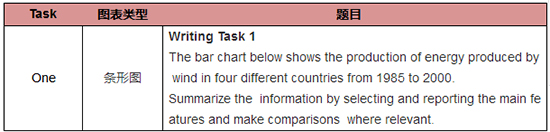
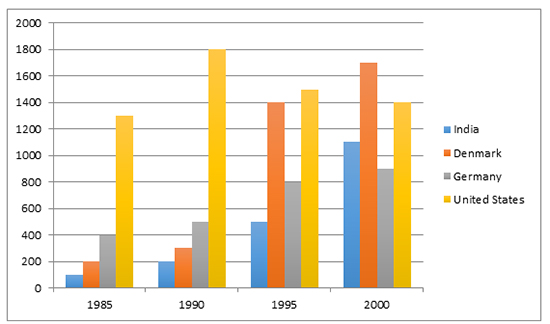
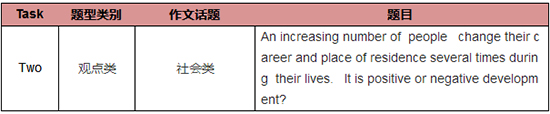
想要了解更多雅思机经内容,欢迎访问启德考培上海考培分校,启德考培学习顾问为您答疑解惑。
想要免费获取备考提分解决方案,您可以通过以下3种方式联络我们:
1、欢迎致电启德考培客户服务中心400-100-0918;
2、欢迎 点击这里 进行网络咨询;
3、填写表单,我们会在1-3天内为您提供专业的服务。
考试热门工具预约
- 测启德在线学习系统,免费开放预约
- 练丰富题库免费预约试用
- 学0元免费预约公开课
- 评实地测试,老师测评,免费开放预约

雅思口语Part2话题卡怎么准备万能素材
2026/09/18 18:46:04

雅思考试前一周怎么冲刺复习
2026/09/18 18:45:55

雅思G类和A类成绩哪个认可度高
2026/09/18 18:45:47

雅思成绩什么时候提交申请最合适
2026/09/18 18:45:38

雅思口语Part1常见问题及回答思路
2026/09/18 18:45:30

托福成绩可以替代雅思申请英国大学吗
2026/09/18 18:45:21