


今天讲给大家带来2017年9月30日雅思考题回顾,快边看边查漏补缺记笔记吧!
雅思听力部分

1 8.37
2 two nights
3 soap
4 music
5 kitchen
6 reception
7 safe
8 city
9 whales
10. helicopter

选择11-15:
11. B
12. B
13. A
14. B
15. C
配对:16-20
16. steer the boat
17. marine animals
18. wild birds
19. cooked seafood
20. history

单选21-24
21. B
22. C
23. B
24. A
配对25-30
25. C
26. B
27. A
28. B
29. B
30. A

31. performance
32. competition
33. oxygen
34. hurry up
35. feet
36. bones
37. red blood
38. heart rate
39. muscle pain
40. shark
雅思阅读部分

参考文章:
History of Refrigeration
A
The term refrigeration refers to cooling an area or substance below the environmental temperature, the process of removing heat. Mechanical refrigeration uses the evaporation of a liquid refrigerant to absorb heat. The refrigerant goes through a cycle so that it can be reused, the main cycles are; vapour-compression, absorption, steam-jet or steam-ejector, and air. Maryland farmer Thomas Moore first introduced the term Refrigerator in 1803, the appliance we know today first appeared in the 20th century.
B
Prior to mechanical refrigeration systems, people found different ways of preserving their food. Some people preferred to use cooling systems of ice or snow found either locally or brought down from mountains and sometimes stored in cellars. Using those techniques meant that diets would have consisted of very little fresh food or fruits and vegetables, but mostly of bread, cheese and salted meats. Milk and cheeses were difficult to keep fresh, they were usually stored in a cellar or window box, but despite those methods, they could not prevent rapid spoilage. People were more than ready for a better system of preserving food. Later on, it was discovered that adding chemicals like sodium nitrate or potassium nitrate to water caused the temperature to fall. Cooling wine with this technique was first recorded in 1550, as was the term “to refrigerate”. Cooling drinks became very popular by 1600 in Europe, especially in Spain, Italy and France. Instead of cooling water at night, people used a new technique; rotating long necked bottles in water which held dissolved saltpeter. The solution was used to create very low temperatures and even to make ice. By the end of the 17th century, iced drinks including frozen juices and liquors were very popular in French society.
C
A demand for ice soon became very strong. Consumer demand for fresh food, especially produce, led to diet reform between 1830 and the Civil War, fueled by the dramatic growth of cities and the improvement in economic status of the general populace. And as cities grew, so did the distance between the consumer and the source of the food. In 1799, ice was first shipped commercially out of Canal Street in New York City to Charleston, South Carolina. The attempt was a failure as there was very little ice left when the shipment arrived. Frederick Tudor and Nathaniel Wyeth of New England saw the great potential that existed for the ice business and revolutionized the industry with their efforts in the first half of the 1800s. Tudor, who was known as the “Ice King”, was more focused on shipping ice to tropical climates. To ensure his product would arrive safely, he experimented with different insulating materials and built icehouses that decreased melting losses from 66 percent to less than 8 percent. Wyeth developed a method of cheaply and quickly cutting uniform blocks of ice that transformed the ice industry. He made speed handling techniques in storage, transportation and distribution possible, with less waste.
D
Eventually it became clear that the ice being scraped was not all clean and was causing health problems. It was becoming an increasingly difficult task to find clean sources of natural ice and by the 1890’s, pollution and sewage dumping had made the job seem even more impossible. The first signs were noticed in the brewing industry, and then the meat packing and dairy industries became seriously affected. Some sort of clean, mechanical refrigeration was desperately needed.
E
Many inventive men were involved in the eventual creation of the refrigerator, through different discoveries that each built on the next. Dr. William Cullen, a Scotsman, was the first to study the evaporation of liquids in a vacuum in 1720. He later demonstrated the first known artificial refrigeration at the University of Glasgow in 1748 by letting ethyl ether boil into a partial vacuum. Olvier Evans, an American inventor, designed the first refrigeration machine to use vapor instead of liquid in 1805. Although he did not actually build it, an American physician named John Gorrie, produced one very similar to Evans’ in 1842 to cool the patients with yellow fever in a Florida hospital. His basic principle is still the most often used in refrigerators today. He found the best way to cool the air was by compressing a gas, then cooling it by sending it through radiating coils, and then expanding it to lower the temperature even more. Evans was granted the first U.S. patent for mechanical refrigeration in 1851 after giving up his medical practice to focus on his experimentation with ice making. In 1820, Michael Faraday, a Londoner, first liquefied ammonia to cause cooling. Ferdinand Carre of France developed the first ammonia/water refrigeration machine in 1859. Carl von Linde was also very influential in the creation of refrigeration. In 1873 he designed the first practical and portable compressor refrigeration machine in Munich and in 1876 he began using an ammonia cycle rather than the methyl ether he used in his earlier models. Linde later developed a new method (Linde technique) for the liquefaction of large quantities of air in 1894. The meat packing industry in Chicago was the next to adopt mechanical refrigeration nearly a decade later.
F
Beginning in the 1840s, refrigerated cars were used to transport milk and butter. By 1860, refrigerated transport was limited to mostly seafood and dairy products. The refrigerated railroad car was patented by J.B. Sutherland of Detroit, Michigan in 1867. He designed an insulated car with ice bunkers in each end. Air came in on the top, passed through the bunkers, and circulated through the car by gravity, controlled by the use of hanging flaps that created differences in air temperature. There were different car designs based upon the type of cargo, whether meat or fruit. The first refrigerated car to carry fresh fruit was built in 1867 by Parker Earle of Illinois, who shipped strawberries on the Illinois Central Railroad. Each chest contained 100 pounds of ice and 200 quarts of strawberries. It wasn until 1949 that a refrigeration system made its way into the trucking industry by way of a roof-mounted cooling device, patented by Fred Jones.
G
Refrigerators that were built in the late 1800s to 1929 used the toxic gases; methyl chloride, ammonia and sulphur dioxide as refrigerants. There were numerous fatal accidents that occurred in the 1920s when methyl chloride leaked out of refrigerators. After the terrible incidents, three American companies began researching less dangerous methods of refrigeration. Frigidaire discovered a new class of synthetic refrigerants called halocarbons or CFCs (chlorofluorocarbons) in 1928. That research lead to the discovery of chlorofluorocarbons (Freon), which quickly became the standard used in compressor refrigerators. Freon was safer for those nearby but was later discovered in 1973 by Prof. James Lovelock, to be harmful to the ozone layer. To prevent further damage, new developments were made, such as Hydroflourocarbons which have no known effect on the ozone layer. Chlorofluorocarbons (CFS) are no longer used; they are outlawed in several places, making refrigeration far safer today than it has ever been.
参考答案:
配对题(时间):
1. refrigeration was available for transportation by road I 1949
2. ice was sold and transported over US A1799
3. use of dangerous chemicals stopped H 1930
4. the word ‘refrigeration’ was first used B 1308
配对题(人名):
5. a more efficient way to refrigerate was invented B Fredrick Tutor
6. refrigerated fresh food was transported by train D JB Sutherland
7. an ice-cutting method that was less wasteful C Nathanial Wyeth
8. refrigerated food was first transported by road E Fredrick Jones
配对题(ending):
9. increased consumer demand for fresh food E a healthier dietary change
10. 暂无
11. death problem led to the D the discovery of CFCs
12. lack of water treatment led to A invention of mechanical refrigerating
13. availability of synthetic refrigerants led to B widespread mechanical refrigeration
(答案仅供参考)

参考原文:
Water treatment:Reed Bed
A
Nowadays subsurface flow wetlands are a common alternativein Europe for the treatment of wastewater in rural areas. Mainly in the last 10 to 12 years there has been a significant growth in the number and size of the systems in use. Compared to common treatment facilities, wetlands are lower in cost investment, lesser to maintain, and are ideal for densely populated rural or suburban areas rather than urban areas.
B
The Common Reed has the ability to transfer oxygen from its leaves, down through its stem and rhizomes, and out via its root system. As a result of this action, a very high population of micro-organisms occurs in the root system, with zones of aerobic, anoxic, and anaerobic conditions. Therefore with the waste water moving very slowly and carefully through the mass of Reed roots, this liquid can be successfully treated.
C
A straightforward definition of a reed bed is if you have dirty water in your pool or water, which is heavily polluted, Reed Beds will be planted to make the water clean again. This is good for ecologyand living organisms and fish in the water. Reed Beds have a wide range of qualities and are acceptable for cleaning everything from secondary to tertiary treatment of mild domestic effluent, to rural waste and even heavy industrial contaminants. The reason why they’re so effective is often because within the bed’s root sector, natural biological, physical and chemical processes interact with one another to degrade or remove a good range of pollutants. Reed beds can be built in a number of variants, but mainly they are of the horizontal flow or vertical (down) flow configuration where water flows through the beds horizontally or vertically.
HORIZONTAL FLOW REED BED SYSTEMS
D
Horizontal-flow wetlands may be of two types: free-water surface-flow (FWF)or sub-surface water-flow (SSF). In theformer the effluent flows freely above the sand/gravel bed in which the reeds etc. are planted; in the latter effluentpasses through the sand/gravel bed. In FWF-type wetlands, effluent is treated by plant stems, leaves and rhizomes. Such FWF wetlands are densely planted and typically have water-depths of less than 0.4m. However, dense planting can limit oxygen diffusion into the water. These systems work particularly well for low strength effluents or effluents that have undergone some form of pretreatment and play an invaluable role in tertiary treatment and the polishing of effluents. The horizontal reed flowsystem uses a long reed bed, where the liquid slowly flows horizontally through. The length of the reed bed is about 100 meters. The downside of the horizontal reed beds is that they use up lots of land space and they do take quite a long time to produce clean water.
VERTICAL FLOW REED BED SYSTEMS
E
A vertical flow reed bed is a sealed, gravel filled trench with reeds growing in it (see the picture below). The common reed oxygenates the water, which helps to create the right environment for colonies of bacteria to break down unwanted organic matter and pollutants. The reeds also make the bed attractive to wildlife.How a vertical flow reed bed works?
F
In vertical flow (down flow) reed beds, the wastewater is applied on top of thereed bed, flows down through a rhizome zone with sludge as substrate, then the root zone with sand as
substrate and followed by a layer of gravel for drainage,and is collected in an under drainage system of large stones. The effluent flowsonto the surface of the bed and percolates slowly through the different layers into an outlet pipe, which leads to a horizontal flow bed and is cleaned by millions of bacteria, algae, fungi, and microorganisms that digest the waste, including sewage. There is no standing water so there should be no unpleasant smells.
G
Vertical flow reed bed systems are much more effective than horizontal flow reed-beds not only in reducing biochemical oxygen demanded (BOD) and suspended solids (SS) levels but also in reducing ammonia levels and eliminating smells. Usually considerably smaller than horizontal flow beds, but they are capable of handling much stronger effluents which contain heavily polluted matters and have a longer lifetime value. A vertical Reed bed system works more efficiently than a horizontalreed bed system, but it requires more management, and its reed beds are often operated for a few days then rested, so several beds and a distribution system are needed.
H
There are several advantages of Reed Bed Systems over traditional forms of water treatment: first, they have low construction and running costs; second, they are easy management; third, they have an excellent reduction of biochemical oxygen demand and suspended solids; last, they have a potential for efficient removal of a wide range of pollutants.
I
Reed beds are natural habitats found in floodplains, waterlogged depressionsand estuaries. The natural bed systems are a biologically proved, an environmentally friendly and visually unobtrusive way of treating wastewater, and have the extra virtue of frequently been better than mechanical wastewater treatment systems. In the medium to long term reed bed systems are, in most cases, more cost effective in installment than any other wastewater treatment. They are robust and require little maintenance. They are naturally environmentally sound protecting groundwater, dams, creeks, rivers and estuaries.
参考答案:
判断题:
14. Conventional methods are best for urban areas FALSE
15. Algae was helpful in purifying water NOT GIVEN
16. Reed beds are best for newly grown plants FALSE
填空题(图形):
17. sludge
18. sand
19. gravel
填空题(选择):
20. H most effective.
21. A has several beds
22. F does not work at the same time.
23. B requires less cost
24. D less attention.
选择题(双选):
25.&26.Which two advantages are mentioned by the writer about natural water purification method?
B. It requires little installation cost
D. It is aesthetically pleasing
(答案仅供参考)

参考答案:
段落细节匹配题:
27. D stone found on earth is similar to that onMars
28. G a plan to analyse materials on Mars
29. E life forms on Mars may be similar to thoseon Earth
30. F observation that there is currently wateron Mars
31. A construction was done on Mars
32. H Martians and Human may have same origins
单选题:
33.Inthe 18th century astronomer William Herschel believed that
B environment of Mars resembled that of earth
34.In the 1990s, people’s belief changed because of
C the work of literature
35.The new evidence found on Viking
D disproved the earlier belief
36.Study of the extremophiles reveals that
A life could survive on Mars
判断题:
37.Lewwill believed that Martian technology was more advanced TRUE
38.Evidence on Viking remains unchallenged FALSE
39.There was significant evidence of climate change on Mars. TRUE
40.Spanish will launch space travel if DNA is found NOT GIVEN
(答案仅供参考)
写作部分

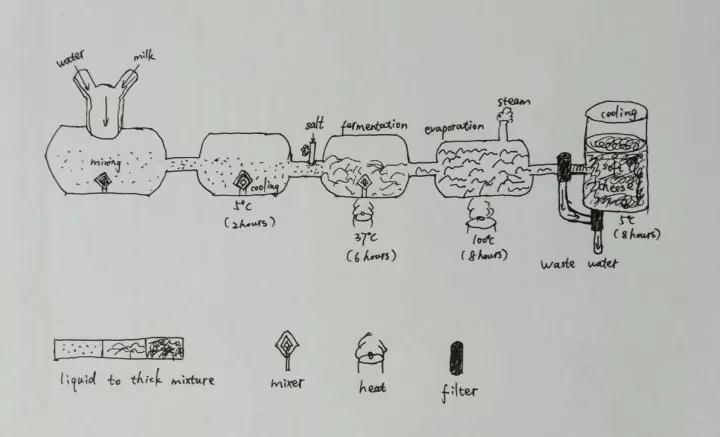
写作参考范文
写作部分

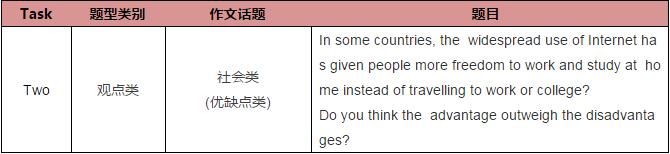
话题类型: 教育类
题目译文:在一些国家,网络的广泛使用给人们的在家工作和学习带来了可能, 而不需要坐车去工作或者学校。你认为好处多于坏处吗?
分析: A类旧题改编。
参考范文:
◆ Internet makes it possible for learners and employees to carry out their duties from home, people may have different opinions on this development. My view is that although the influence of this trend has its own limitations, it brings people more benefits.
◆ It could be argued there are certain disadvantages associated from using it for work or study. The obvious constraint is the limitation on works. Some jobs, especially those of manual labor nature, cannot be done online or at home. For example, construction requires employees to be on site. Similarly, the drawback also applies to study of some certain areas. For instance, chemistry requires many experiments conducted in the laboratory, which cannot be done at home. Additionally, there is a wide range of people out there who prefer face-to-face learning and working, which they find more effective than online learning. For example, classical blackboard learning still dominates many universities simply because it is easier for students to ask any questions they do not understand when they can have a talk with the teacher in the reality.
◆ However, I believe the development of internet appeals to people’s needs more, especially for employees and students. It shrinks the cost of transport getting to work every day. For example, under the condition of the rising price on patrols, commuters can save a significant proportion of their income on transportation by telecommuting, which leads to higher standard of living for them. This is particularly important for young people, whose income might be not as high as elderly. Meanwhile, studying at home allows students to allocate their time so to maximize the efficiency of learning as they can take a break when they are tired, thus using the time they spent on learning as efficiently as possible.
◆ Overall, despite some minor drawbacks or boundedness of using internet for working and learning, it has dramatical increase in the efficiency of learning and working as a whole, which prompts people live in a lot more easier life.
以上为9月30日雅思考题回顾。以上就是启德考培分享的2017年9月30日雅思考题回顾,如果想了解更多关于雅思机经相关信息,请关注启德考培珠海分校平台,免费获取备考提分解决方案,或欢迎 点击这里 进行网络咨询,我们会给您提供专业的服务。最后,预祝大家雅思考试能取得理想的成绩。
考试热门工具预约
- 测启德在线学习系统,免费开放预约
- 练丰富题库免费预约试用
- 学0元免费预约公开课
- 评实地测试,老师测评,免费开放预约

雅思口语Part2话题卡怎么准备万能素材
2026/09/18 18:46:04

雅思考试前一周怎么冲刺复习
2026/09/18 18:45:55

雅思G类和A类成绩哪个认可度高
2026/09/18 18:45:47

雅思成绩什么时候提交申请最合适
2026/09/18 18:45:38

雅思口语Part1常见问题及回答思路
2026/09/18 18:45:30

托福成绩可以替代雅思申请英国大学吗
2026/09/18 18:45:21